(This is a repost of my translations of Ryuusuke Hikawa’s columns that were originally posted on Concrete Revolutio’s official site.)
- Superhuman Investigation Column #1: The Giant From Space, Grosse Augen!
- Superhuman Investigation Column #2: The Original Inhabitants of Earth, the Tartaros Bugmen
- Superhuman Investigation Column #3: The Boundary Between Man and Machine, Artificial Union Megasshin
- Superhuman Investigation Column #4: Kaiju, the Fantasy Creatures Made Possible by Video
- Superhuman Investigation Column #5: The Space Craze Transformed Superhumans
- Superhuman Investigation Column #6: The Age of Bands, the Age of Electric Guitars
- Superhuman Investigation Column #7: Space, Electricity, People, and…
- Superhuman Investigation Column #8: The Close Connection Between Detectives and Superhumans
- Superhuman Investigation Column #9: Eternally Recurring Characters
- Superhuman Investigation Column #10: World Affairs and the Spy Boom
- Superhuman Investigation Column #11: Protests, Song, and the Baby Boom
- Superhuman Investigation Column #12: The Feeling of Continuity Between the Post-war Period and Wartime
- Superhuman Investigation Column #13: Superhuman Abilities and a Change of Purpose

Superhuman Investigation Column #1: The Giant From Space, Grosse Augen!
Published: September 4, 2015
Author: Ryuusuke Hikawa (Anime and Tokusatsu Researcher)
Concrete Revolutio ~Superhuman Phantasmagoria~ (ConRevo for short) is an anime where various “superhumans” appear one after another. The purpose of this column is to be a supplement to the work to provide more information on these superhumans.
The alien kaiju that appears in the first episode, Grosse Augen, is a bipedal hero who, at first glance, appears to be a monster. He is depicted in the promotional video spinning at ultra-high speeds and emitting light. On the other hand, the S Planetarian is a slender alien, who is depicted in the PV rapidly becoming gigantic, and gives the impression of being a hero character. How these two beings come to oppose each other is something to look forward to in the episode, so let’s instead look back a little on the real world’s history of hero characters.
One of Japan’s representative heroes is Ultraman (1966). Nowadays, that figure with a smooth body and a face like a mask has been imprinted on us as an archetypical “hero.” But when I was 8 years old, I first saw Ultraman in magazines as a sort of “unprecedented being,” and my first impression was quite different.
At the time, it was uncomfortable to see this frightening giant, with his slippery appearance and eyes that turned up at the edges. His mask was originally made of latex, giving a rougher texture, which just made it look extra eerie. Furthermore, the still photos in the magazines showed a kaiju that looked like Pagos (Neronga) and a humanoid cicada alien (a Baltan alien), as well as more enemies which inherited their image from an earlier work, Ultra Q. Seeing them side by side made Ultraman’s uniqueness stand out even more. It was a strange feeling. Of course, as the broadcast began and footage of him fighting kaiju piled up, the recognition of him as a hero grew stronger; it just needed time. Having the full picture changes how we view things.
A giant superhuman who comes from space was relatively original. Once a concept has become solidified in the human mind, it becomes difficult for us to get outside of that framework and give thought or recognition to what’s beyond it. When we reach a state where these various boundaries have blurred, we could dismantle our essence, and possibly find clues for the pursuit of something that surpasses our humanity. The superhuman, Grosse Augen, got me thinking about this.
Next time and thereafter, I want to talk about the superhumans who appear in ConRevo, and discuss them from all sorts of different angles.
[tl notes: Grosse Augen means “big eyes” in German, and would you look at that, our boy has a big ol’ eye on him. Pagos is monster/kaiju from Ultra Q, Neronga is one from Ultraman that does look similar. Baltans are bug-like humanoid species of aliens from Ultraman.]
Superhuman Investigation Column #2: The Original Inhabitants of Earth, the Tartaros Bugmen
Published: October 9th, 2015
Author: Ryuusuke Hikawa (Anime and Tokusatsu Researcher)
Episode 2 tells the story of the Black Fog incident that was caused by the Tartaros Bugmen. Extending between Shinka Era Year 41 and Shinka Era Year 48, it’s a story that leaves a bitter aftertaste. Actions one takes in the belief that they will do good can bring down the most ruinous disasters to those in a different position. That is where a truly horrible reality lies.
During the post-WW2 period of economic growth, humanity was able to prosper with science and technology. Humanity was given the name “lord of creation,” and right along with that pride came skepticism. Why did humans alone gain such knowledge? Why were we able to use tools to change our environment? There is no intelligent life we must coexist with, so why do we bother calling ourselves the “rulers of Earth”?
One can construct a theory if they look back on the history of humanity itself. One group invades another’s land in an attempt to expand their own territory — these acts we call conquest and invasion happen over and over again, and it is not uncommon for them to lead to massacres or genocide. Our records and evidence bases were established by and centered on modern humans. But what if there was intelligent life on a divergent evolutionary line from humans, and our massacres extended to the previous ruling lifeforms…?
Such doubts are from long ago now, but they are depicted in all sorts of media aimed at children. Even now, they have a huge influence on media, with one notable example being the TV tokusatsu series, Ultraseven (1967)’s 42nd episode, “Ambassador of the Nonmalt.” To the preceding Earth lifeforms, the Nonmalt, humanity and our actions likely made us seem like aggressors. This was an astounding development that overturned our deep-rooted moral values. Once we entered the 1970s, this sort of “inter-tribe conflict” was a very common setting. Umi no Triton (1972) depicts a power struggle between the Triton Tribe and the Poseidon Tribe, whose positions have been swapped in the story. In Getter Robo (1974) the Dinosaur Empire had been driven underground, and when they finally return, they claim legitimate sovereignty over the Earth’s surface.
The show’s creators must have been conscious of the endless real-world struggles, such as the African-American Civil Rights Movement, which was intensified by the assassination of a very important person to the movement. There were also struggles like the Vietnam War, how it dragged on and devolved into an undeniable mess. Is it okay that having a different appearance alone is enough to declare one as an enemy, or that we can wound and eliminate people for the sake of profits? Is it okay to never reign in our desires, even as they expand without limit?
This kind of skepticism that never seems to produce a solution will be projected into this work’s superhumans and their disputes, as well.
[tl note: The “Lord of Creation” thing in the second paragraph seems to be a Japan-specific happening. I’m no history buff, but I was unable to find any real English equivalent of the term (originally: 万物の霊長).]
Superhuman Investigation Column #3: The Boundary Between Man and Machine, Artificial Union Megasshin
Published: October 19th, 2015
Author: Ryuusuke Hikawa (Anime and Tokusatsu Researcher)
Episode 3 depicts a serial bombing incident that began in Haneda Airport in Shinka Era Year 42, as well as a former Japanese soldier being returned home from Guam at that same airport after 28 years. It’s an episode that paints a picture of the sorrow of a humanoid robot weapon developed during the war. The hard lifestyle of Raito Shiba, the detective who has been given a mechanical body, is shown in this episode, and simultaneously, it is an episode that raises the question of where the boundary is between man and machine.
The word “robot” first appeared in Karel Čapek’s 1920 play, R.U.R. (Rossum’s Universal Robots), in which there were lifeforms that imitated the human body. When this was introduced to Japan in 1923, the term “android” was used, and attempts were made to turn them into reality by mechanical means. In the postwar period, childrens’ novels and manga translated the word literally as “robot” instead, and “robot anime” also took off. When Astro Boy began in 1963, Tetsujin 28-go and Eightman were also beginning, with each of the three presenting the concept of robots in different ways. The autonomous type, Astro, was a boy hero of the future. Tetsujin, a giant weapon developed during the war, was the piloted type. And then there is Eightman, developed with NASA’s cutting edge technology, which is the the adult humanoid robot type of our discussion. He has the memories of a detective who died in the line of duty implanted in him.
The original concept of Eightman sci-fi author Kazumasa Hirai penned was very similar to a brain transplant: he was a cyborg. However, in a meeting, one of the staff had written the word in such a way that it meant “cell tool,” demonstrating just how unfamiliar the general public was with the word. Having mechanical parts in a person’s body enhances their capabilities, but in exchange, their identity as a human falls into crisis. This kind of drama was popularized with Shotaro Ishinomori’s manga, Cyborg 009.
The early 1970s saw the start of two tokusatsu series based off Ishinomori’s stories: the story of the cyborg Kamen Rider (1971) and the story of a robot in Jinzou Ningen Kikaider (1972). Along with Go Nagai’s giant robot anime Mazinger Z (1972), the three and their different approaches create a familiar refrain. Human civilization has become inseparable from the benefits of technology, bringing us to our present-day questioning of it in all manner of forms. Though we have an awareness of the question of where the boundary between man and machine lies, we have no choice but to continue living on and striving towards new horizons. Robots, cyborgs, and superhumans, in any time period, are beings that continue to shed light on the true essence of humanity.
[tl note: About Eightman and “cell tool,” the word cyborg in Japanese is a loan word (meaning they took it from a different language). This would normally be written as an approximation of the original word’s pronunciation that doesn’t even hint at a meaning. The way the staff wrote it was instead a couple of vaguely sciencey kanji (which DO carry meaning in every symbol) that would be pronounced the same way cyborg would be. The literal meaning of those kanji is cell tool. It’s like when a psychologist says “you have very flat affect.” and you’re just thinking “so true, I’ve never been effective at anything” because it kinda makes sense and definitely sounds the same and you just don’t even know there’s an unrelated word they’re using. Basically, they were thinking of something pretty different because they were just THAT unfamiliar with the word “cyborg.”]

(Eiji Tsuburaya with actor in Godzilla suit)
Superhuman Investigation Column #4: Kaiju, the Fantasy Creatures Made Possible by Video
Published: October 26th, 2015
Author: Ryuusuke Hikawa (Anime and Tokusatsu Researcher)
The first two-parter in the series, comprised of episodes 4 and 5, has the title “Japan Kaiju History.” The American film Pacific Rim (2013) used the Japanese word “Kaiju,” bringing worldwide recognition of kaiju as a distinct concept from just a monster.
1963 CE — the “God of Manga” Osamu Tezuka, with his own company Mushi Production, created the TV anime Astro Boy. In 1966, Eiji Tsuburaya, the special effects director who became known to the world as the “God of Tokusatsu,” along with his company (then known as) Tsuburaya Special Effects Production, gave the world a full-blown tokusatsu TV series, Ultra Q. This pair had many similarities, including that their broadcasts began at the start of the year.
Ultra Q was conceptualized as a fantasy series aimed at adults, but from the strong demand of the broadcasting stations, the series was changed, ultimately becoming the start of the “kaiju craze” for school-age children. Where did this demand come from? Eiji Tsuburaya was an innovator who, in the 1954 movie Godzilla, had breathed new life into the monster film genre with his special effects technology that brought the fantasy creatures we know as “kaiju” to the big screen. Before then, the genre had sought to have points of overlap with reality, with ideas such as giant apes being discovered in secluded regions, or dinosaurs and bugs that had mutated into giants. However, what Tsuburaya had depicted with Godzilla was completely fantastical, with characteristics like having its spine glow before it would fire its heat ray. It was this reality-transcending visual expression that blew people away. War and the scientific age played a large part in all of this, as well.
If one rearranges the production order of Ultra Q, a gradual shift towards a “kaiju evolutionary line” is revealed. In contrast with the beginning and its large number of giant creatures, the 2nd cours of the series introduces “Ultra Kaiju” that can exist only with fantastical special effects such as Pegira and Garamon, and finally, the Ultraman-like wetsuit-wearing aliens make their appearance. The ontogenetic process of the TV series Ultra Q is a condensed version of the phylogenetic history of kaiju movies.
In July 1966, Ultraman introduced a “monster of the week” format with kaiju, bringing about a definitive transformation in all children’s programming. Ultraman was created with the idea of being the strongest kaiju (alien) in order to have each week’s kajiu conflict come to an end in a 30 minute time slot. However, due to the influence of Astro Boy, broadcasting stations strongly desired and pushed for a shift towards hero stories, similar to mass produced sci-fi anime… Such a surprising historical context makes one realize that kaiju and superhumans are by no means opposite ideas. If anything, they can be seen as part of the same family, connected by a straight line.
[tl notes: In the second to last paragraph, I just wanted to note for people who might not know, a “cours” is basically just a chunk of episodes in a TV series (usually around 11-13). You might have heard people use use “cour” instead, but they are wrong, because it is a French word and the French love extra letters that nobody pronounces.]
Superhuman Investigation Column #5: The Space Craze Transformed Superhumans
Published: November 2, 2015
Author: Ryuusuke Hikawa (Anime and Tokusatsu Researcher)
Episode 5 is the second half of “Japan Kaiju History.” Here, I want to focus on the keyword “space.” As touched upon previously, in the year 1966 of the real world, Ultraman fueled the kaiju craze. If the gnarled-looking kaiju are chaos, then the literal superhuman Ultraman is order. That smoothed out, metallic skin, marked with the vermilion symbol of humanity, is an appearance reminiscent of the rockets and robots that are the apex of technology.
Ultraman also changed its own franchise’s concept of kaiju. Ultra Q used the name of “Kemurian” for the aliens of Kemur the same way we would use “American” for people from America; but after the popularity of the Space Ninja Baltan Planetarians, the naming scheme of “_____ Planetarian” was adopted, creating a category of enemy that was both kaiju and alien. In April 1967, its successor series, the space tokusatsu Captain Ultra (produced by Toei) started, including Vandel Planetarians as recurring villains. In December of that same year, a show where each week had a different alien (Planetarian) appear, Ultraseven, began. This was a groundbreaking series that connected the worldview of its superhumans by having them share Ultraman’s home world, Nebula M78.
In reality, there was a space craze in TV anime in 1965, the year before Ultra Q. With Space Patrol Hopper, Space Alien Pipi (live action/anime mix), Space Boy Soran, Space Ace, and Planet Boy Papi, the list from that year is completely dominated by space. However, this rapidly declined, being swallowed up by tokusatsu, which could express the texture of things like silver rockets.
The space element popularized in anime was combined with kaiju, and amplified by the feeling of texture brought by tokusatsu, creating an upward shift in the gears of history. It must also not be forgotten that this space craze is something that was born out of the Cold War. For example, in Ultraseven, the war between countries of Earth was dramatized as an interstellar war. That was a reaction to real world events. If nuclear weapons are used thoughtlessly, all-out nuclear war will begin, obliterating even the users. That’s why proxy wars were pursued in Asia simultaneously with technological competition in the frontier of space. The space race peaked in 1969 when America’s Apollo 11 landed on the moon. Because of that achievement, the space craze in fiction gained even more momentum.
The kaiju and superhumans of the fictional world cannot be divorced from the real world. Concrete Revolutio is a work that reminds us once more of this fact.
Superhuman Investigation Column #6: The Age of Bands, the Age of Electric Guitars
Published: November 10, 2015
Author: Ryuusuke Hikawa (Anime and Tokusatsu Researcher)
Episode 6 takes a complete 180 by having a story focused on a comic band. When young people realized in the 1960s that the new age of music was breaking through barriers, it changed from something that was listened to passively, to something that was actively performed to connect with the hearts of their friends. Using the power of music, they shook off the older generations that continued to bring on war, believing they could revolutionize the world with a framework of love and peace.
This was the background against which the electric guitar rose to prominence. In the late 1950s, out of the rise of American rock n’ roll, the electric guitar exploded in popularity as a new sound that only young people understood. Meanwhile, in the 1960s, the Japanese music scene rapidly shifted from the style of focusing on the lead singer to bands that placed importance on the entire ensemble.
In May 1962 and January 1965, The Ventures came to Japan. Right after that, in June 1965, an electric guitar band contest show called Electric Guitar Battle Tournament began to air on TV, and in December 1965, a film starring Yuuzou Kayama, Campus A-Go-Go was released. Infatuated with the electric guitar’s unprecedented sound, young people all over went out to get their own, and the electric guitar boom began. The peak of this was in June 1966, when The Beatles performed at the Nippon Budoukan.
Amidst these trends, comic bands were quickly gaining popularity in movies and TV. These bands had multiple members, and they had the skill to roll through comedy skits just like harmonizing in music performances. One example of this, Hajime Hana and the Crazy Cats, took over a generation in the 1960s with the TV program Shabondama Holiday and the series of comedy films collectively known as “Crazy Movies.” Their junior band, “The Drifters,” gained attention when they opened for The Beatles’ Japanese performance, and they started to have many TV appearances. In 1969, The Drifters started broadcasting the TV show Hachiji da yo! Zen’in Shuugou, which became very popular with children, gaining them recognition as a comedy group with unique characters.
The activity of The Drifters and Crazy Cats has a close connection with that of musicians who performed around military camps during the time Japan was under US occupation, which ended in the early 1950s. They were a part of a larger current of entertainers who sought to ease the exhaustion of corporate salarymen through variety programs and band performances during the period of rapid economic growth. There is a distinct line that can be drawn between the band culture born of the postwar period, and the age of the pre-war and wartime bands; however, both are connected by the electric guitar that advanced the era. It’s an extremely fascinating point when one thinks about superhumans.
[not-sophie notes: In paragraph 3, I’m so sorry about the movie title, and I couldn’t explain it to you, but that does seem to be the official English title for the movie. Also, just in case someone reads this and doesn’t know, the Nippon Budoukan is a martial arts hall that’s also very famous as a performance hall for music acts. For paragraph 4, just know that The Drifters is referring to the band that originated in Japan. Not the American one, not the Irish one, not the Swedish one, the Japanese one.]
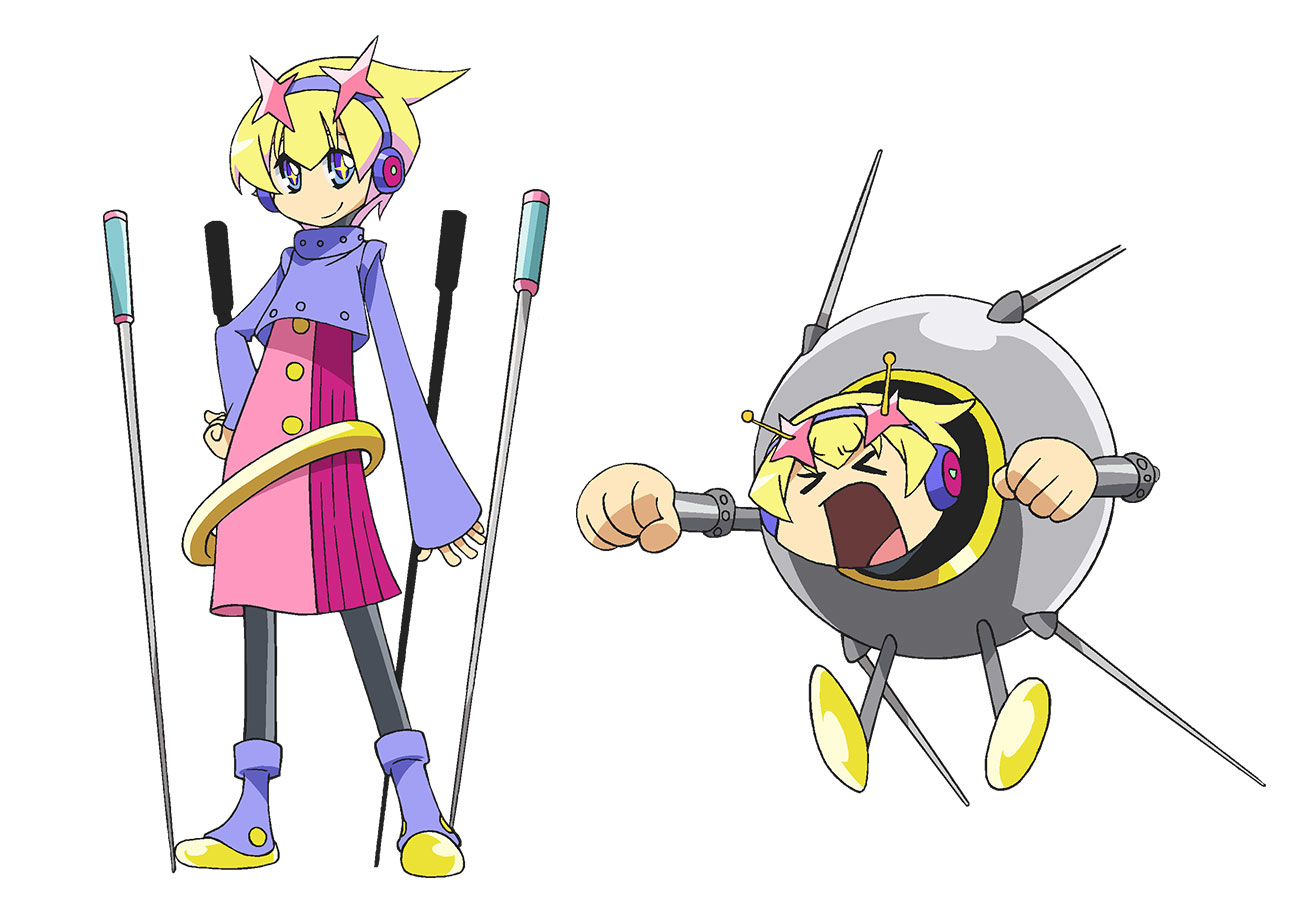
Superhuman Investigation Column #7: Space, Electricity, People, and…
Published: November 20, 2015
Author: Ryuusuke Hikawa (Anime and Tokusatsu Researcher)
As previously stated, the space craze’s origin point was 12 years after the end of the second world war, 1957. At the same time, the Soviet Union launched its artificial satellite, Sputnik 1, and the space race between the Soviets and the Americans proceeded in full force. Both countries used rocket technology diverted from their original use as ballistic missiles intended to destroy enemy countries, so until the Cold War ended, science always straddled the line between peace and war uses. Children’s stories were influenced by the times, so rockets and robots became seen as desirable, futuristic objects. Ultraman‘s (1966) design reflected aspects of both to an extent, and the Osamu Tezuka original work that started around the same time, the TV tokusatsu series Ambassador Magma (1966), has a protagonist that is a sort of “rocket man” created by the Earth’s guardian deity, Earth-sama.
To the extent that things along the lines of robots and rockets could be experienced, they did not reflect what existed in people’s lives in 1960s Japan. The majority of the mechanical displays in these works were analog, with pins, despite the fact that digital LED displays were mainstream. Even Osamu Tezuka’s Astro Boy (1963) had analog-style components everywhere. Astro would make a “ch-pee, ch-pee” sound as he walked. This unique sound effect is not electronic or digital-based: sound designer Matsuo Oono created the sound by recording a marimba on a 6mm tape, playing the instrument while turning the reel at the same time.
Machines have humanity embedded in them in these ways, but humans themselves have also been changed and transformed by the influence of technology. There are many depictions of this in the world that would be the height of terror for children in particular. These originate with H.G. Well’s 1897 novel, The Invisible Man, but this concept was revitalized by the special effects of the space age, and evolved quickly. With films like, The H-Man (1958), The Secret of the Telegian (1960), and The Human Vapor (1960), Toho and the God of Tokusatsu Eiji Tsuburaya revealed that tokusatsu’s potential wasn’t just in kaiju; it could also be used with transformed humans. It’s interesting that the the motifs in these movies of water, electricity, and gas are also vital city infrastructure, though perhaps this is reading too much into it.
Non-human things are changed into humanesque creatures, and humans are transformed into non-human states. As city infrastructure becomes more widespread with the technology we’ve developed, perhaps our human nature is being damaged along with that spread. The fact that such a deep fear sprouted in the populace could be why movies and TV projected those fears back to us like a mirror with dreamlike stories. These feelings, like revolving shadow lamps, will be evoked by Episode 7…
Superhuman Investigation Column #8: The Close Connection Between Detectives and Superhumans
Published: November 27, 2015
Author: Ryuusuke Hikawa (Anime and Tokusatsu Researcher)
Episode 8 depicts the undercurrent of Jiro’s values during the showdown between a boy detective and a mysterious thief. The “detective” is the root of all superhuman works. The original publisher of Superman, D.C. Comics, even has the word “detective” in its name. The story structure of conflict between beings who throw the world into chaos with strange incidents and beings who restore peace by solving mysteries is one of the foundations of superhuman fiction.
Speaking of detectives, many Japanese people will have memories of being at a school library and seeing foreign works like Holmes and Lupin lined up along with The Collected Works of Rampo Edogawa’s Boy Detective (Poplar Publishing). This famous series is about a detective named Kogorou Akechi and his boy detective club, and centers around them tackling the strange cases of the Fiend of Twenty Faces. It first appeared in 1936 in the pre-war magazine “Shounen Club.” After being cut from the magazine during a hiatus, it resumed serialization after the war, in 1949, but this time in the magazine “Shounen” (the same magazine that published Astro Boy). In 1950, “Boy Detective Club” was made into a series of movies, and following this, it became a staple of broadcast media, making countless appearances in radio, TV, etc. In 1968, Mushi Production (known for producing Astro Boy) adapted the stories into an anime called Wanpaku Tanteidan. Rintarou and famous directors like Osamu Dezaki made radical changes to modernize the story, devising many new ideas such as having the characters fire the original work’s BD (Boys Detective) badges from a gun.
Detective fiction also influenced the TV shows of 1953. The #1 domestically produced TV hero, Juurou Houri of Moonlight Mask (1958), was also a detective, and he incorporated some elements from Superman. His costume, with its turban, sunglasses, cape, and the crescent moon mark, is easy for children to imitate. His motorcycle can also be substituted with a bicycle, making him very popular. Episode 3’s “Mammoth Kong” kaiju, with his total height of 15 meters, is depicted using a simple miniature along with special effects.
Moonlight Mask’s original creator, Kouhan Kawauchi, positioned him as both a mystery (even his casting brings out questions) and as a hero of justice. There is a feeling of skepticism towards the idea of fighting in the name of “justice.” In contrast to Superman, who is the embodiment of justice itself, the Japanese hero has some unique characteristics, despite also being a “detective” type who helps the police. In 1972, with the explosion of nostalgic manga, the TV anime version of Moonlight Mask, The One Who Loves Justice: Moonlight Mask started. His design was refined, giving him a helmet, and he used new weapons like a crescent moon boomerang.
Detectives have a deep connection to superhumans. In many ways, the detective is an unavoidable existence when investigating the idea of superhumans.
Superhuman Investigation Column #9: Eternally Recurring Characters
Published: December 4, 2015
Author: Ryuusuke Hikawa (Anime and Tokusatsu Researcher)
Episode 9 is about a family that can live forever. All of the superhumans in this work, including the machines, house some level of “life.” However, this episode grants us another opportunity to rethink the roots of the “life” in fiction.
Generally, characters can be broadly categorized as either “growing type” characters or “eternally recurring type” characters. The growing type changes over time in both body and mind. The majority of myths and fairy tales have a beginning and an ending, and irreversible changes occur in the story. These changes are something that the reader feels after reading through to the end, and this shared feeling fulfills the purpose of the story. The most easily understood kind of change in a story is that of a person’s death. For humans, we think the most about where we have been and where we are going, so on an individual level, this comes down to our life and death. Even the structure of tragedy in stories is that death brings about grief, which synchronizes with the viewers’ inner thoughts, giving them catharsis.
With the eternally recurring type, on the other hand, the characters do not develop, and the next episode of the story reuses the same starting point. Over a hundred years ago, comic strips began in newspapers, and this was the structure they used. In some number of panels (Japan uses 4), characters are shown behaving in eccentric ways, or making some sort of big mistake, and the curtain closes on a light-hearted resolution. Readers can start reading at any time, and don’t need to worry about the ending. In exchange for not having any development whatsoever, these stories tend to mix in current events to continue making fresh material for the stories.
From the 50s to the 60s, television inherited the “situation comedy” from single-act stage plays. Sitcoms thrived in America, and were also introduced to Japan, having a huge influence on culture. This form of comedy had a weekly broadcast loop centered on unique settings, like Bewitched with its hook of “what if a housewife was a witch,” and often focused on idiosyncratic characters. These shows established a habit of sitting down to watch TV every week. The stories start in the morning, end by night, and it all resets as you sleep, starting again the next morning. This daily eternal recurrence and the open flow of TV has a different feeling from movies, which are appreciated in the closed space of a theater.
Considering this history, a paradoxical logic can be found in the many decades of unchanging, “eternally recurring TV shows” and the great value our rapidly-changing modern society places on their comforting familiarity. It’s a rock-solid stability that transcends time and common sense, and on top of that, has no awareness of its own transcension.
Superhuman Investigation Column #10: World Affairs and the Spy Boom
Published: December 15, 2015
Author: Ryuusuke Hikawa (Anime and Tokusatsu Researcher)
Episode 10 introduces the organization called IQ (Infernal Queen), whose clientele are implied to be governments from all over the world. If countries seek to acquire profit, one of the best methods to obtain it is through use of force. It’s possible there are cases where countries are seen in open conflict with each other, but are working hand in hand to maximize their profits behind the scenes. It is fascinating that there are organizations conducting subversive operations while acting out complex plots.
The second World War happened at a time where military strength became too powerful due to advances in science and technology. Because of this, the post-war world was divided into two camps, and they transitioned into a state of affairs known as the “Cold War.” This had the effect of allowing the major powers to avoid direct confrontation; however, the power struggle continues in the shadows. Since movies and TV are part of popular culture, they are greatly influenced by such real-world developments. In the early 1960s, there was an explosion of war stories, and along with that came the “spy story.” In 1962, the movie Dr. No (then known in Japan as 007 is the Killing Number) was released to the public, and became a series. Weekly Boys’ publications would feature the many “secret weapons” used by James Bond, and anime and tokusatsu followed the trend as well.
For example, the TV tokusatsu series Phantom Agents (original story by Tatsuo Yoshida) from 1964 takes the classic ninja story and brings it to the present day, with a special squadron that fights against a secret society. In Skyers 5 (1967), the protagonists are an elite team of international police officers fighting against an international crime syndicate called Ghost. In Osamu Tezuka’s 1965 story W3 (Wonder 3; known as The Amazing 3 in English), the protagonist’s older brother is a member of Phoenix, a secret intelligence agency. In Tsuburaya Productions’ Mighty Jack (1968), a private organization battles with a secret organization, featuring a high-tech flying battleship which was essentially the lead role. The hit British special effects puppet show Thunderbirds (released in Japan in 1966) started a trend of featuring “super mecha.” 007 had a different setting in that he was part of the British Secret Intelligence Service (MI6), but there was a huge amount of overlap in their special effects staff.
Now the biggest question is, what is the reason evil secret organizations are created? Shotaro Ishinomori’s Cyborg 009 (which began serialization in 1964) suggested it was for the financial gain of the arms industry, which was a truly persuasive idea. Bringing that even further back leads us, of course, to the nation itself. 007 was an agent of the state, so his main mission was to deal with national concerns.
A secret organization backed by the state is just like the Superhuman Bureau. Within the complex relationships between the nation, the organization, and the individuals, what do the superhumans think, and how will they choose to act…?

Superhuman Investigation Column #11: Protests, Song, and the Baby Boom
Published: December 21, 2015
Author: Ryuusuke Hikawa (Anime and Tokusatsu Researcher)
[tl note: You need this beforehand. “Japanese baby boom generation” is not the same concept as “baby boomers.” It’s referring to a much briefer timespan (of just a couple of years, actually) where there was an huge spike in births in Japan. It’ll tell you that, but I also wanted to tell you in advance because I expect this is knowledge a Japanese person would likely have already had.]
In the 1970s, a folk song by JIRO’s called “Children Who Don’t Know War” became a hit. As a middle school student, I couldn’t help but believe myself to be a child who didn’t know war. Much later in life, I realized I couldn’t have been more wrong. The realization came to me while I was thinking about the culture and history around the Japanese baby boom generation.
I have an uncle with an age difference of exactly ten years from me. He is, without a doubt, of the Japanese baby boom generation. He was 18 years younger than my father, and as the youngest of seven siblings, he was actually closer to my age. I called him “big brother.” He is an example of a poor family deciding to have another child due to their faith in a safer future. This unprecedented baby boom took place from approximately 1947 to 1949. This means that the cause of the Japanese baby boom generation was the end of the Pacific War. Listening to “Children Who Don’t Know War” again while putting these familiar examples together pointed me to this generation. It is key that the generation became adults and entered the workforce in such high numbers in the 1970s.
At that time, and even now, the world continued to wage war. With that being the case, many of the “children who were granted life because of war” must have felt like they needed to do something about it. The representation of those thoughts is in song. What the rise of youth subcultures and intensification of student activism meant to those involved becomes clear when keeping this in mind. ConRevo‘s 11th episode, “Song and Antiwar Protest” depicts this in a well-rounded way, using the story of the real world as its backdrop.
Superhuman-related media also has a strong connection to this time period. Post-war manga magazines began launching one after the other, setting their sights on the huge number of children who were born after the war’s end. They expanded their cultural sphere by utilizing this generation’s desire for superhumans. When they were in elementary school, Astro Boy and Tetsujin 28-go began their serialization, while Godzilla became a huge hit. During the time they reached upper elementary grades, weekly boys’ publications launched, Tokyo Tower was completed, TV media suddenly rose to prominence, and weekly content consumption became the norm.
Building on all of this, TV cartoons aimed at the Japanese baby boom generation’s 10-year younger little brother generation emerged, moving superhuman media towards its next evolution. It’s all connected to “war,” and that’s because the connection is causal. I’d like to see where the story of ConRevo, which has this in its grasp, goes from here.
Superhuman Investigation Column #12: The Feeling of Continuity Between the Post-war Period and Wartime
Published: December 28, 2015
Author: Ryuusuke Hikawa (Anime and Tokusatsu Researcher)
In the mid 1980s, when I was an engineer at an electronics company, I was in charge of designing hardware for communications devices. It wasn’t just circuit diagrams; selecting components was also an important part of the job. I placed orders for these through the purchasing department, but one day, I received an angry phone call. “Why in the world are you using MIL-SPEC?” It was the first time I’d heard the term. Expecting the costs to be high, I followed the instructions I was given and resubmitted the order. Work proceeded as before, but on further investigation, I found out the term is a United States Military Standard. “MIL” was an abbreviation for “Military.” It was a standard for supply procurement that was set by the United States’ Department of Defense.
Though there was resistance to the parts, their accuracy was different and the range of their temperature compensation differed immensely. The below zero range in particular was large, making it the standard that’s associated with use in cold regions. It stands to reason that the cost would also be different. This standard isn’t only used by the munitions industry or the Ministry of Defense; it also has the operation compensation necessary for certain types of industries. However… I thought about when the English loan word “military” became familiar in Japanese. It’s easy to say “when the war ended,” but the only one that ended was the Pacific War. The country was rebuilt and the constitution was changed, but I thought it was better to acknowledge that war has continued to this day.
A long time has passed since Seiichi Morimura’s The Devil’s Gluttony (1981 edition) became a bestseller. Although there are doubts about the book’s authenticity regarding some of its claims, the idea that the former Japanese Army’s Unit 731 engaged in biological warfare research and human experimentation is a point that gives us perspective on the continuity between wartime and the post-war period.
Unit 731 also has some connection to the 1948 Tengin Bank Robbery. It was one of the strange incidents of the postwar period: the culprit, who was knowledgeable about drugs, pretended to be a technical officer with the Ministry of Health and Welfare. He had the bank employees drink a deadly poison, potassium cyanide, and then took all the money. During the course of the investigation, police obtained information from an individual involved with the army’s 9th Research Institute in Noborito, but the occupying force’s GHQ ordered them to stop investigating people who were formerly connected with the army. In other words, because the biochemical data from wartime was rather valuable, postwar America, an occupying force in Japan at the time, are suspected to have used it in a trade.
There have been countless attempts to shed light on this kind of post-war darkness. We want to investigate the parts that are of interest. And since Noborito is close to where Ikuta is, you may come to a realization and see the substance of what ConRevo is trying to depict. Though we have just reached 70 years since the end of the war, war remains something that is always close by.
Superhuman Investigation Column #13: Superhuman Abilities and a Change of Purpose
Published: January 15, 2016
Author: Ryuusuke Hikawa (Anime and Tokusatsu Researcher)
“Justice, Peace, Freedom.” Phantom Sword Claude narrowed down the reason superhumans fight to these three points, and presented them to the general public. Up until 1970, the heroes of fictional worlds touted abstract ideas such as these, and the audience was satisfied with them. In recent years, slightly more concrete goals such as “for the sake of everyone’s smiles” and “so we can live without fear” have started to appear.
Perhaps the deadline for narrowing our value systems down to one passed during that period of time, forming fault lines. Symbols of these points of disconnect are the 1970 renewal of the US-Japan Security Treaty, as well as the Shinjuku riot on October 21st, 1968, which became the basis of Episode 13. This riot was at the peak of the Japanese New Left’s anti-war movement, and was a major incident where approximately 2000 armed protesters destroyed trains and facilities at Shinjuku Station and clashed with riot police, resulting in 743 arrests.
Protest activity started in Yokosuka to prevent US nuclear submarines from docking, and at the same Shinjuku Station, a train car carrying jet fuel for the US military exploded. Even though Japan’s reaction to the war was to advocate for “peace,” these events showed that, behind the scenes, the government was supporting war. A Japan that has been transformed into a military base does not truly have “freedom.” One can speak of “justice,” but within the ideological conflict of the Cold War, what is justice, and for whom? The outburst of these doubts is what gave way to the riot.
Between late 1968 and the mid-1970s, tokusatsu and anime hero shows had waned, bringing in the era of the more humanistic “gritty sports” media. People were able to discover a “superhuman nature” with stories of people forging their bodies through intense training for sports such as baseball, boxing, and wrestling. In that same timeframe was the Apollo 11 moon landing in 1969, and the Osaka World Expo in 1970. Both were peaks of the scientific age, but paradoxically, everyone started to realize the limits of our overwhelming scientific power with its inability to solve certain problems.
How did the times change after such fault lines were crossed? One example is Weekly Shounen Magazine, which had begun publishing adult stories aimed at the Japanese baby boom generation with content such as biking, gambling, and problematic relationships. In 1972, they completely changed the tone of their covers. They began to feature subjects such as “the young man who won’t amount to anything” from Otoko Oidon (by Leiji Matsumoto) and female pop idols. And following this year, the 70s giant robot anime boom was kicked off with the premiere of Mazinger Z (by Go Nagai).
Of course, superhuman media has since continued to produce new works to match the children of the times, but there was clearly a huge disconnect and transformation in this time period. Against the societal upheaval of reality, what sort of drama will ConRevo’s second season show us? I’m looking forward to its continuation.



 THE TRASHLATION BLOG
Leave a comment